
As predictions were confirmed and the Apple launched this Tuesday (20/04) the much talked about AirTags, object tracking tags. AirTags will cost around $29 (around R$160) – a pack of four costs $99 (around R$550) – and will be available in the United States starting April 30th. In Brazil, there is no release date yet, but prices are already known: while the unit costs R$369, the package with four tags costs R$1.249.
AirTags can be attached to any everyday item, such as bags, keys and backpacks. The idea behind the product is to give the user control over objects that may be lost through the Find My iPhone app. Here, users can check the item's most recent location. It is also possible to set a sound on the tracker so that the user knows the object's whereabouts, if it is within Bluetooth range.
“We’re excited to bring this incredible new capability to iPhone users with the introduction of AirTag, leveraging the vast Find My network to help them track and find the important items in their lives,” said Kaiann Drance, vice president of marketing at Apple. Apple.
Made of stainless steel, the AirTag has a circular shape similar to a brooch and is IP67 certified for water and dust resistance. The integration mechanism with the iPhone is very similar to that of the AirPods: the user brings the tracker close to the device and consolidates the connection. During integration, the Apple ensures that all location data is computed anonymously with end-to-end encryption.
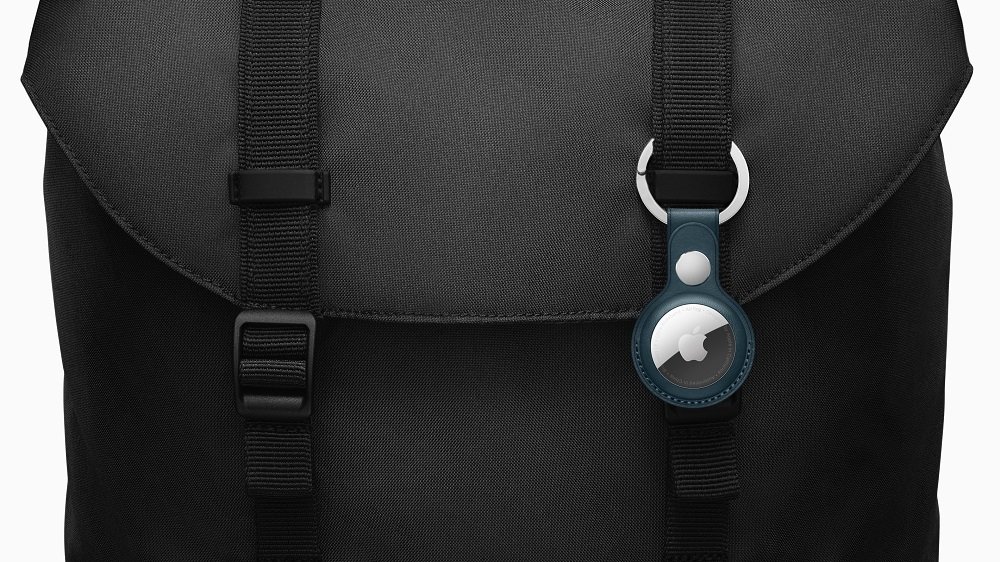
AirTags can be attached to any everyday object, from bags to wallets (Apple/Disclosure)
Internal settings and accessibility
All AirTags are equipped with the U1 chip, designed by Apple with ultra-wideband (UWB) technology. According to the American company, this technology allows the AirTag to be determined more accurately in terms of distance and direction. To do this, the device combines sensors from the camera input, augmented reality, accelerometer and gyroscope to mark the location. In practice, as the user moves around in the space, an arrow on the iPhone indicates the path to the AirTag.
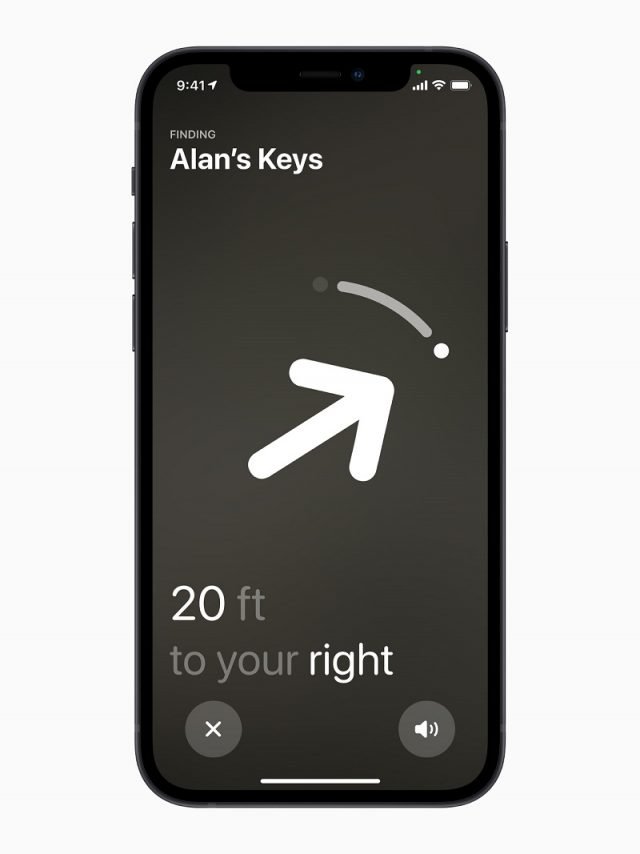
With AirTags, your iPhone can serve as a compass to find lost objects (Apple/Disclosure)
If the tracker is out of Bluetooth range, the Find My network, through its billions of connected phones, can help the user locate it. Apple explains that it is possible to detect the Bluetooth signals of a lost AirTag through another iPhone and relay the location back to its owner. The encryption, according to the company, is done anonymously and privately, so only the user can see where their AirTag is. The company also clarifies that neither your data nor your location history are stored on the tag.
The new AirTag also includes support for accessibility features built into iOS. For example, the iPhone's VoiceOver-enabled location tool can provide directions for blind or visually impaired users. In this case, the user will be given directions by Siri.
Alongside the AirTag, the Apple also presented some accessories for it, something that also had already leaked before.
Click below to watch the launch video.
https://youtu.be/BqkLgbNDFUM