
Procon of São Paulo notified some of the top apps delivery companies in the country due to complaints received regarding mandatory safety measures against Covid-19, the disease caused by the new coronavirus. Loggi, iFood, Rappi and Uber Eats were reported for irregular conduct by delivery drivers, and will have to explain the preventive hygiene and safety measures adopted by employees during the pandemic.
Among the most common complaints are the absence or incorrect use of protective masks and the failure to sanitize billing equipment – card machines – before offering them to customers to pay for products (when the procedure is not previously carried out through the application itself).
According to Procon's determination, the notified companies will need to prove that they offer guidance and training to their delivery drivers. In addition, they will have to demonstrate that they provide safety and hygiene materials (masks and alcohol gel, for example), in addition to making clear which service channels are offered for this type of complaint and the measures that each company adopts upon receiving them.
Procon Director speaks to VC
In a video recorded exclusively for the Vida Celular, Fernando Capez, the agency's executive director, confirmed that the official position of the notified companies should be made by next Tuesday (02/02), and made clear what he expects from the companies. According to Capez, one of the first and most important measures, despite being controversial, is to provide greater safety for the consumer who comes across a delivery person without a mask.
“He can refuse to receive the product and contact the supplier company. If he doesn’t want to create a problem, he can receive the product and then file a complaint with the company or Procon. Procon will call the company and provide guidance so that it can adopt protection and guidance standards,” he advised.
When asked whether it was necessary to report the infraction to prove the fact, Capez agreed positively: “Any type of evidence, especially photographic or video evidence, helps a lot and provides greater support and credibility. However, it is not essential, since the Consumer Code determines the reversal of the burden of proof. This means that a detailed, credible statement is accepted as true, until proven otherwise.”
The director of Procon-SP also addressed another issue that tends to be the focus of complaints involving logistics and product delivery companies, not just food or groceries: credit card scams. Complaints about data theft and card cloning after use on both platforms and physical machines used by app delivery drivers are common.
“First of all, you have to check if there is anyone nearby, and do not allow them to check the transaction or the password itself. Secondly, never give your password, under any circumstances or pretext, to anyone. If there is any problem, go to the bank branch and speak to the manager or employee. Never allow anyone to do so,” warned Capez.
According to the executive director of Procon, there is a very simple way for those who feel wronged. “The best and most immediate way to complain to Procon is to access the Procon SP website. A page will open with a huge bar: Make your complaint here. It takes no more than 2 minutes and the consumer will receive the protocol by SMS to track the progress online”, he concluded.
Companies defend themselves
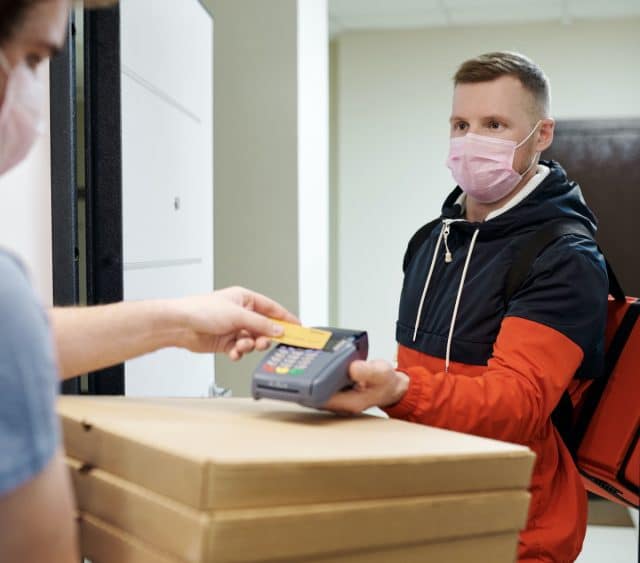
Norma Mortenson/Pixabay
The VC report sought out all the companies notified by Procon in São Paulo to give them the opportunity to defend themselves against user complaints and point out what they are already doing to, if necessary, comply with the standards stipulated by the agency. Representatives from iFood and Loggi sent their official statements and guaranteed that they will comply with what is required by the regulatory agency.
“Loggi clarifies that it received the notification today, January 28, and that it will respond to Procon within the deadline. Since the beginning of the pandemic, the company has been concerned about maintaining good practices to prevent Covid-01. The company provides guidance to self-employed delivery drivers registered in its base on prevention measures and offers protective kits (alcohol gel, mask and gloves), with replacement permitted by filling out a form sent via the app itself,” the company assured, detailing, in the sequence, other points addressed by the company aiming at combating Covid-19.
“In addition, Loggi has updated its package receipt process and eliminated the need to sign protocols to avoid exchanging items. The company is also advising its merchant clients to replace the use of payment machines with online payment alternatives. Loggi also highlights that it is part of the group of companies that developed and signed the Covid-19 Prevention Guide, which helps companies and customers comply with the recommendations of the World Health Organization (WHO) in combating and preventing the disease,” he concluded.
iFood denies notification
iFood, also in an emailed statement to the press, followed a similar line of defense to the one presented above, but claimed that, at least until now, it had not received any notification from the regulatory agency. “iFood did not receive the notification from Procon-SP and reiterates that it is at the agency's disposal. It is important to emphasize that the company, since the beginning of the pandemic, has taken a series of measures to support the ecosystem, distributing informative materials to both employees and restaurants and delivery partners, and brought to light the importance of frequent hygiene for each of them, the forms of prevention and how to do it”, it pointed out.
According to iFood, several measures have been taken precisely to avoid a greater risk of contamination by the new coronavirus. “The company has made 'Contactless Delivery' available, a solution that can be chosen by users when placing the order. Then, the consumer arranges via the app's chat with the delivery person or restaurant the best place for the order to be left. iFood also recommends the correct and immediate disposal of all packaging and reinforces to customers the importance of proper hand hygiene. It also provides online payment methods to avoid as much contact as possible and ensure the protection of delivery partners and consumers.”
Just like Loggi, iFood pointed out that all delivery drivers have been instructed to take preventive measures and have been properly equipped with kits specially prepared to prevent the spread of the new coronavirus. “Since March of last year, iFood has already allocated more than R$86 million reais to delivery drivers for protection and care measures for the 150 delivery partners who use the platform. In addition, iFood constantly distributes kits with alcohol gel and washable protective masks and gives delivery drivers R$30 per month to purchase items,” it pointed out.
“Regarding the issue of payment terminals, iFood recommends that consumers make payments via the app to avoid inconvenience. However, in any type of transaction involving payment by card, it is important to check the amount on the payment terminal display and not enter the password if the amount is not clearly displayed. If you have made any transaction without being sure of the amount, we recommend that, as soon as the transaction is completed, you check the amount debited in your bank’s app and, if there is any discrepancy, request immediate cancellation. iFood reinforces that it remains committed, as it has always been, to creating initiatives to improve the experience of its consumers, always based on active and constant listening”, concluded the company.
Also sought by the report to give their positions, the other two companies notified by Procon of São Paulo, Rappi and Uber Eats, did not respond to the contacts and questions of the Vida Celular until the publication of the article. If they respond, the content will be updated immediately.
Image: Norma Mortenson/Pexels