
Speculation has already begun surrounding the next generation of the iPhone, which is being called the iPhone 13. Scheduled to be released next fall, the new iPhone 13 will feature new flexible battery technology, which will allow it to maintain its capacity while taking up less physical space.
The information was released by market analyst Ming-Chi Kuo, one of the most respected when it comes to Apple.
According to him, it will be the first time that the iPhone 13 and iPhone 13 Mini will use a technology called “soft battery”, that is, a flexible battery technology that reduces the number of layers, making it much thinner. Ming-Chi Kuo also revealed that the companies Jialianyi, Xinxing and Huatong will be the suppliers of this type of battery.
By the way: the same source said, on another occasion, that the following models, the iPhone 13 Pro and iPhone 13 Pro Max, will receive ultra-wide-angle lenses, composed of six plastic lenses and an autofocus system. Also according to him, the iPhone SE 13 will receive a 6-inch screen and Touch ID.
What are the flexible batteries that will be in the iPhone 13?
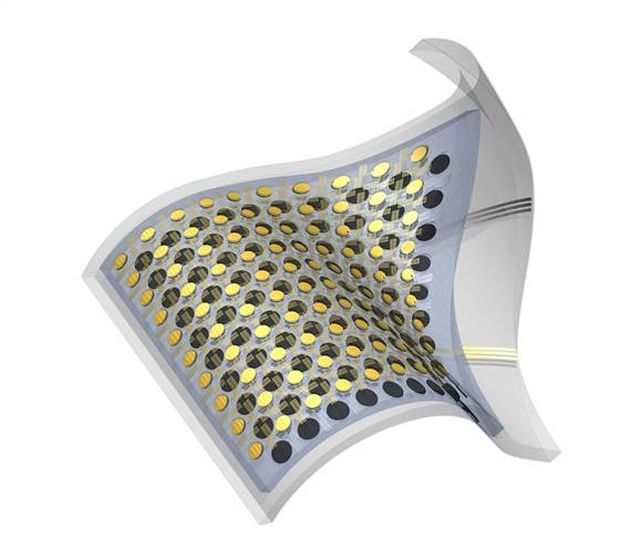
Flexible batteries have been presented by researchers at the Swiss Federal Institute of Technology Zurich (ETH Zurich). Flexible batteries can be used in devices such as wearable electronics and foldable smartphones. Their main feature is their flexibility: they can be bent, stretched and twisted without ceasing to function. All this without compromising their electrical characteristics.
Technically speaking, flexible batteries are made of lithium-ion, like current batteries. However, they are made differently: two layers of flexible polymer impregnated with carbon are used, forming a kind of “sandwich”. These layers function as the anode (negative pole) and cathode (positive pole). To ensure the flow of current, a microscopic layer of silver flakes is used in flexible batteries. The main difference is that these flakes overlap each other, so that they do not lose contact with each other. The result: even if the battery is deformed, this contact is not lost.
Another positive point of flexible batteries is that, because they use water-based electrolytes, they are not flammable. Therefore, there is no risk of flexible batteries catching fire, as has happened repeatedly over the years.
Now, just wait and see!
Through which channels you reach those people, classic and out of the box. Phone Mantra.